

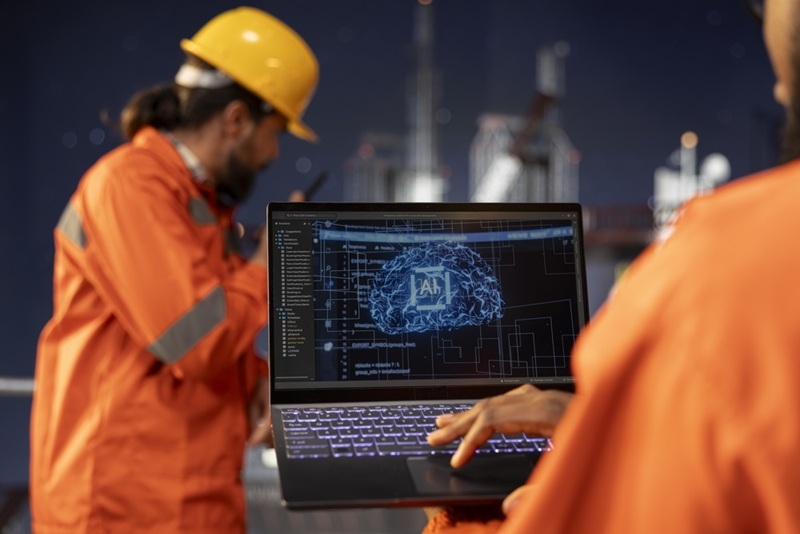
AI in mining industry has completely changed the way mines operate every day. It can improve your decision-making and significantly reduce your delays. This tech also supports a safer working environment. The change is steady and practical. It is built on better data and smarter systems.
In this blog, you will understand the role of AI in the mining industry in 2026 and what its benefits are. It will also cover the top smart mining solutions in 2026.
Must Read: Role of Automation, AI in Revolutionizing Mining Operations
The following list will help you to understand the role of AI in mining industry:
AI studies large amounts of data from mining sites. This includes machine output and site conditions. The goal is to make decisions clearer. Teams rely less on guesswork. They use real insights to plan tasks. This helps reduce delays and improve daily performance across operations.
Machines are tracked through smart systems. These systems detect early signs of problems. Maintenance happens before breakdowns occur. This keeps operations steady. The equipment works longer without sudden failure. Teams avoid unexpected stops that affect workflow.
AI helps locate useful materials with better accuracy. It reduces extra digging. It limits waste across operations. Resources are used more evenly. This supports stable output and avoids unnecessary effort at mining sites.
Machines now handle risky tasks in deep or unstable areas. Workers stay away from dangerous zones. This reduces the chance of accidents. Safety improves without slowing down operations. The work environment becomes more controlled.
Mining automation technology is now part of everyday mining work. It is not treated as an extra feature. It is built into how operations run.
Automated systems handle drilling and hauling. They also support material processing. These systems follow fixed steps. This improves consistency across tasks. Results become easier to predict.
Machines work for longer hours without breaks. This keeps operations running without long stops. Output remains steady across shifts. Teams do not depend on manual effort alone.
Planning becomes easier when work stays consistent. Schedules are followed with fewer changes. Teams coordinate better because tasks stay on track. This reduces confusion across departments.
Mining automation technology also improves time management. Tasks are completed steadily. There is no rush. The focus remains on consistent output rather than speed alone.
Things that you must know about digital mining transformation are explained in the following:
Digital mining transformation enables teams to track operations in real time. Managers can see what is happening on site at any time. This helps them act quickly when issues appear. It reduces delays and keeps work moving.
Different mining stages are now linked through shared systems. Machines and teams stay connected. This reduces communication gaps. Work flows from one stage to another without confusion.
Digital tools study patterns from past data. This helps teams plan future tasks with more accuracy. It reduces sudden changes in operations. Planning becomes more stable over time.
The following list will help you understand the benefits of mining automation technology:
Automation reduces delays caused by manual work. Machines complete tasks faster and more consistently. This improves overall efficiency. Work continues without unnecessary stops.
Manual work often includes small mistakes. Automated systems follow fixed steps. This reduces variation in results. Operations become more consistent over time.
Machines handle tasks in risky areas. Workers stay in safer environments. This reduces accidents and injuries. Safety improves without slowing production.
You can check the steps below to find the best mining productivity tools in the following list:
The first step is to understand where problems exist. This could be in drilling or transport. Tools should solve real issues. This ensures better results from the start.
Tools should work well with existing systems. Poor compatibility creates delays. Smooth integration helps teams start using tools quickly.
Tools should be simple to operate. Complex systems slow down adoption. Easy tools are used more often and with fewer errors.
Good mining productivity tools provide useful data. This helps teams make better decisions. Data should be clear and easy to understand.
Tools should remain useful over time. Short-term fixes are not enough. Long-term value supports steady operational improvement.
The top 5 smart mining solutions in 2026 are explained in the list below:
Self-operating vehicles move materials across sites. They follow fixed routes. This reduces delays and improves consistency in transport tasks.
Machines are controlled from safe locations. Operators do not need to be on site. This reduces risk and improves comfort during operations.
These systems track equipment and conditions in real time. Teams receive updates quickly. This helps prevent delays and improves workflow.
Equipment is checked for early signs of wear. Maintenance is done before failure occurs. This prevents sudden breakdowns and keeps operations stable.
All data is stored in one place. Teams can review performance easily. This improves planning and supports better decision-making.
AI in mining industry is shaping how operations are managed. It improves safety and efficiency in a steady way. The focus is on the practical use of technology. Mining operations become more stable and reliable over time with the right approach.
AI improves safety by reducing the need for workers to enter risky areas. Machines handle tasks in deep zones and unstable conditions. Systems also monitor site conditions in real time. They send alerts when risks increase. This helps teams take action early and avoid accidents during daily operations.
Automation helps improve consistency in mining operations. Machines perform tasks in a steady way without frequent errors. This reduces delays and keeps production stable. Workers focus more on supervision instead of manual work. It also helps maintain quality across different stages of mining.
Data gives a clear picture of what is happening on site. It helps teams understand performance and identify issues early. With accurate data, decisions become more reliable. Planning improves over time. This reduces unexpected problems and supports smooth daily operations.
This content was created by AI